Overview
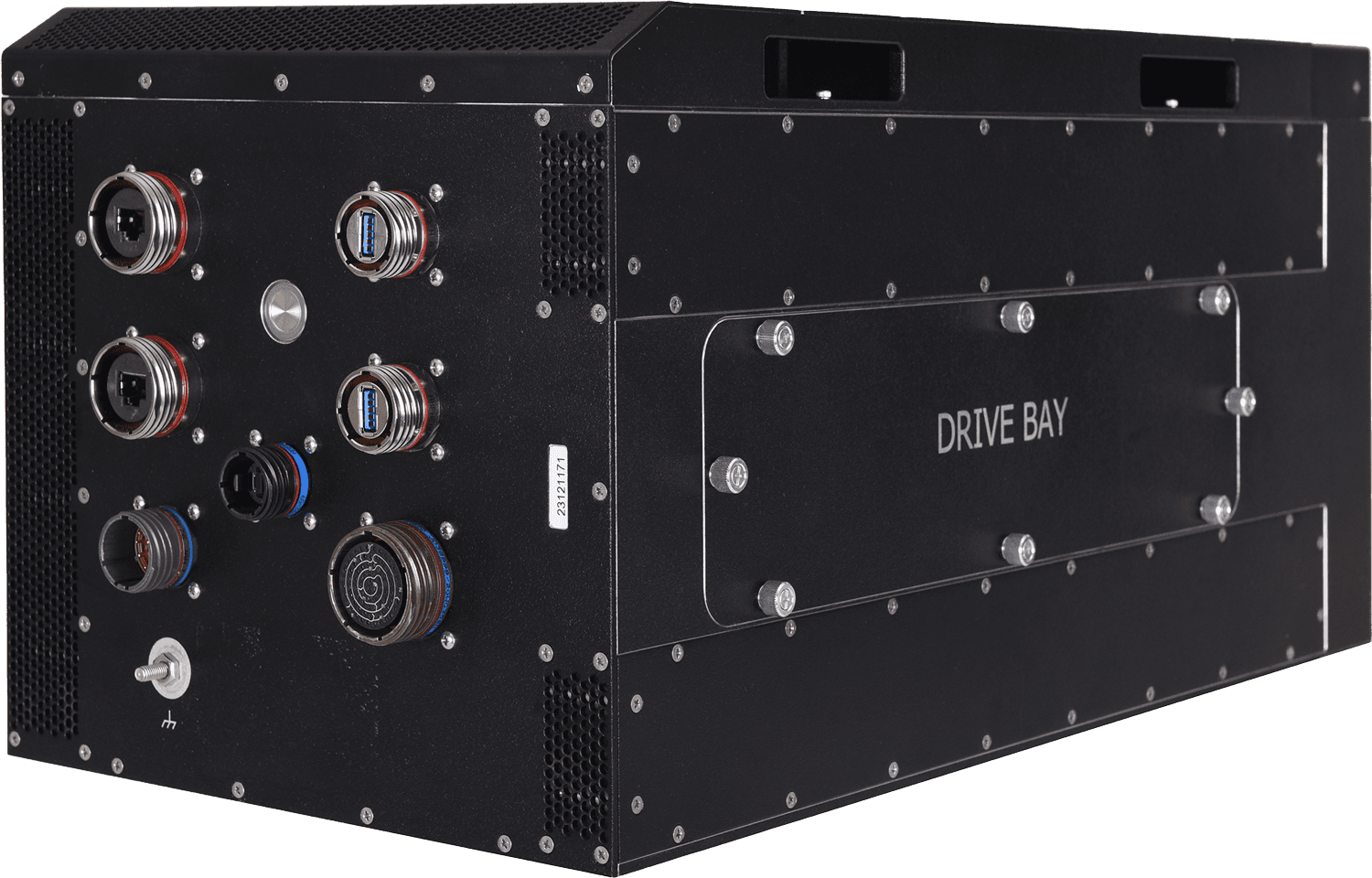
TITAN100 underwent environmental vibration testing to evaluate its ability to withstand and operate in vibration environments representative of jet aircraft store applications. Testing was conducted in accordance with MIL-STD-810H, Method 514.8 (Vibration), Procedure I (General Vibration), using a vibration profile derived from Figure 514.8D-9 and Table 514.8D-IV for instrument pod environments.
Test Configuration
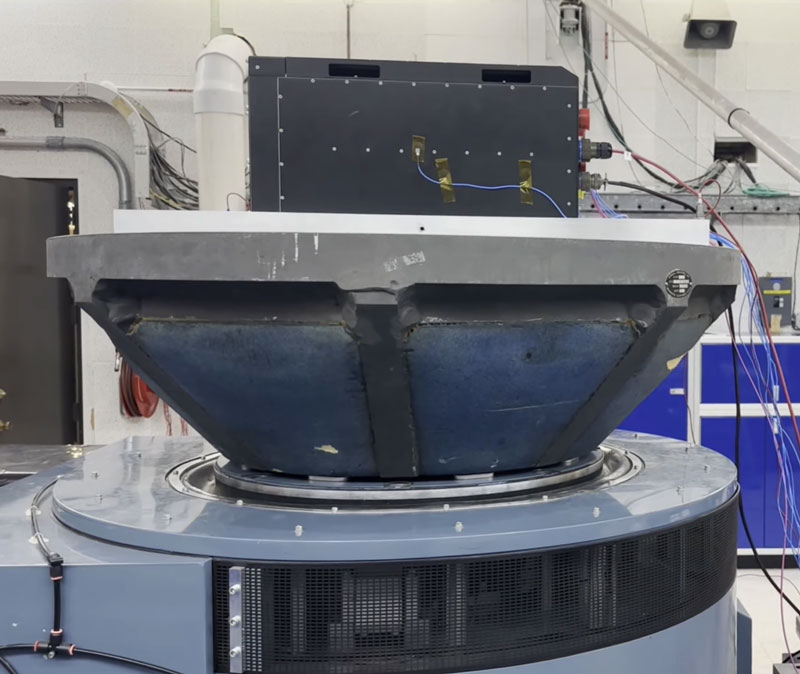
TITAN100 was mounted to a vibration test fixture attached to a slip table and instrumented with control and monitor accelerometers to measure both input and local structural responses. Testing was performed along all three orthogonal axes (X, Y, and Z).
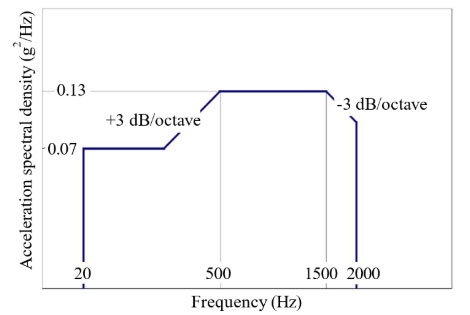
The vibration profile is from Figure 514.8D-9 of the MIL-STD-810H document, seen in Figure 1 above. The profile consists of a broadband random vibration environment spanning 20 Hz to 2000 Hz with an overall level of approximately 15.1 g RMS. The unit was exposed to one hour of vibration in each axis. In addition to the full-level testing, low-level signature surveys were conducted before and after each axis test to monitor the dynamic characteristics of the structure and identify any changes in resonance behavior.
MIL-STD-810H Compliance
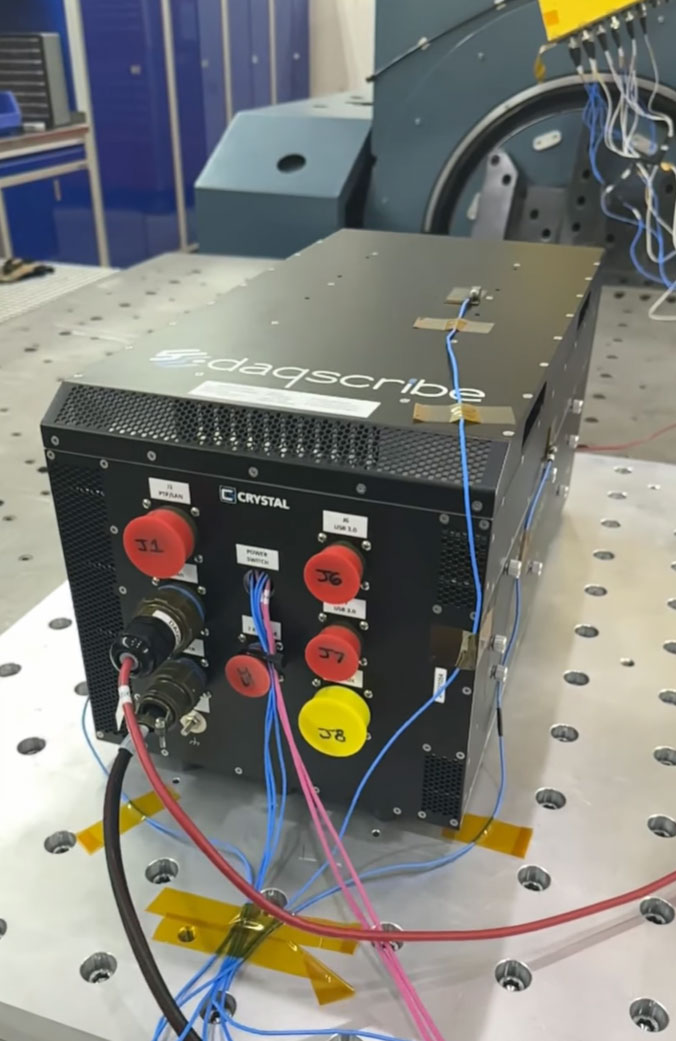
The vibration spectrum, duration, axis sequence, inspection steps, and operational checks were executed in full accordance with MIL-STD-810H Method 514.8. Five operational checks were performed: one pre-test, three during vibration, and one post-test. Throughout testing, TITAN100 was powered and monitored to confirm proper command execution, system response, and data-recording performance. Visual inspections were conducted to identify any signs of loosening, cracking, deformation, or other physical damage.
Results
TITAN100 successfully completed the full vibration tests without interruption, controller aborts, structural damage, or operational anomalies. All three one-hour vibration exposures were completed as planned, and the system remained fully functional throughout testing.
Comparison of pre-test and post-test low-level signature measurements showed no significant changes in dynamic response characteristics, indicating that no structural degradation or resonance migration occurred as a result of vibration exposure. Inspection activities identified no evidence of cracked components, loose hardware, connector failures, or permanent deformation.
TITAN100 continued to respond to commands, record data, store data, and perform its intended functions before, during, and after vibration exposure.
Conclusion
TITAN100 successfully met all requirements of MIL-STD-810H Method 514.8, Procedure I. The unit demonstrated robust structural integrity and full operational capability under the specified jet-aircraft store vibration environment. No failures, degradation, or physical damage were observed, confirming that TITAN100 passed the vibration qualification.