Matching Capability to Mission: How to Choose the Right Daqscribe Recorder – Q&A
Selecting the right data recorder for your mission or research program isn’t just a matter of matching bandwidth numbers on a spec sheet. It’s about understanding your data flow, operating environment, and performance expectations – then pairing them with the right instrument from Daqscribe’s selection of ethernet data recorders.
To help, we sat down with Michael Powell, Vice President of Sales and Marketing at Daqscribe Solutions LLC, to answer some of the most common questions from customers seeking Ethernet recording systems for Electromagnetic Spectrum Operations (EMSO), SIGINT, and high-speed networking applications.
Q: What’s the best place to start when selecting a Daqscribe recorder?
A: Start by understanding your network data rate and mission environment. Our customers typically begin with the question:
“What’s the maximum data throughput I need to sustain?”
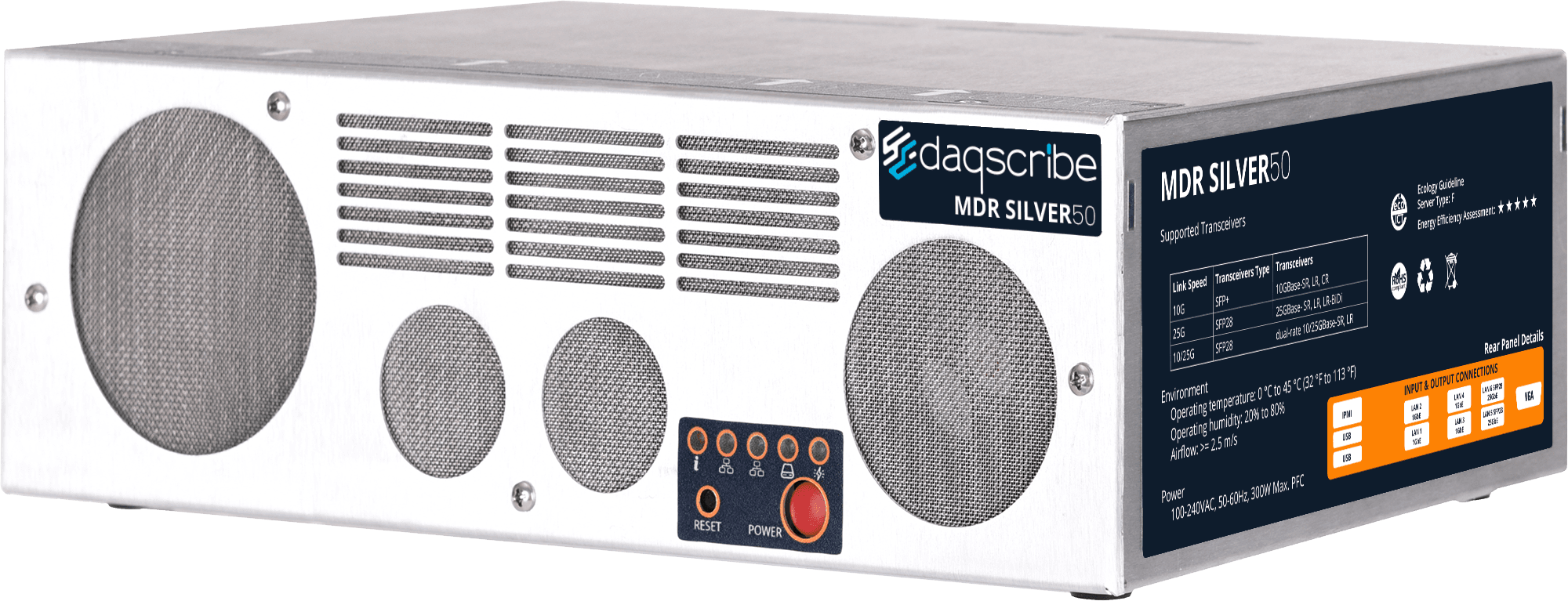
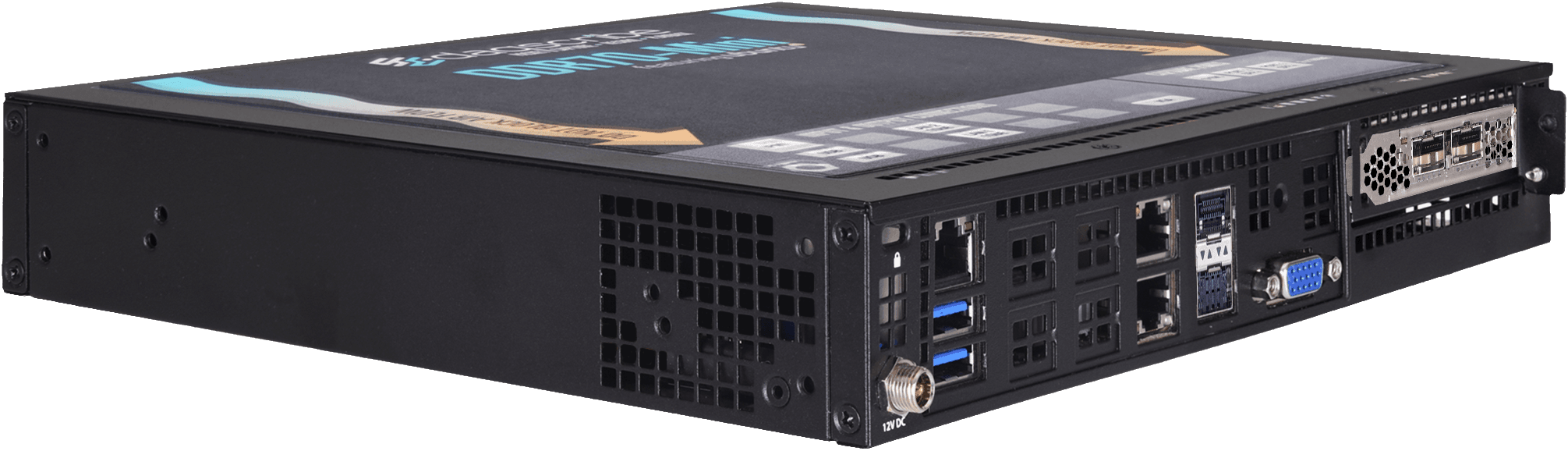
For example, if your system outputs up to 20 Gbps, an MDR MINI20 may be all you need for development or field testing. For higher-speed applications — 50, 100, 200, or even 400 Gbps — our MDR SILVER50, DDR HYPERION, and XDR TITAN series step in to deliver full-rate capture without packet loss.
From there, we match your bandwidth requirements with other key factors: storage depth, system size, power constraints, and environmental conditions.
Q: What are the major differences between the MDR, DDR, and XDR product families?
A: Each family serves a different mission profile.
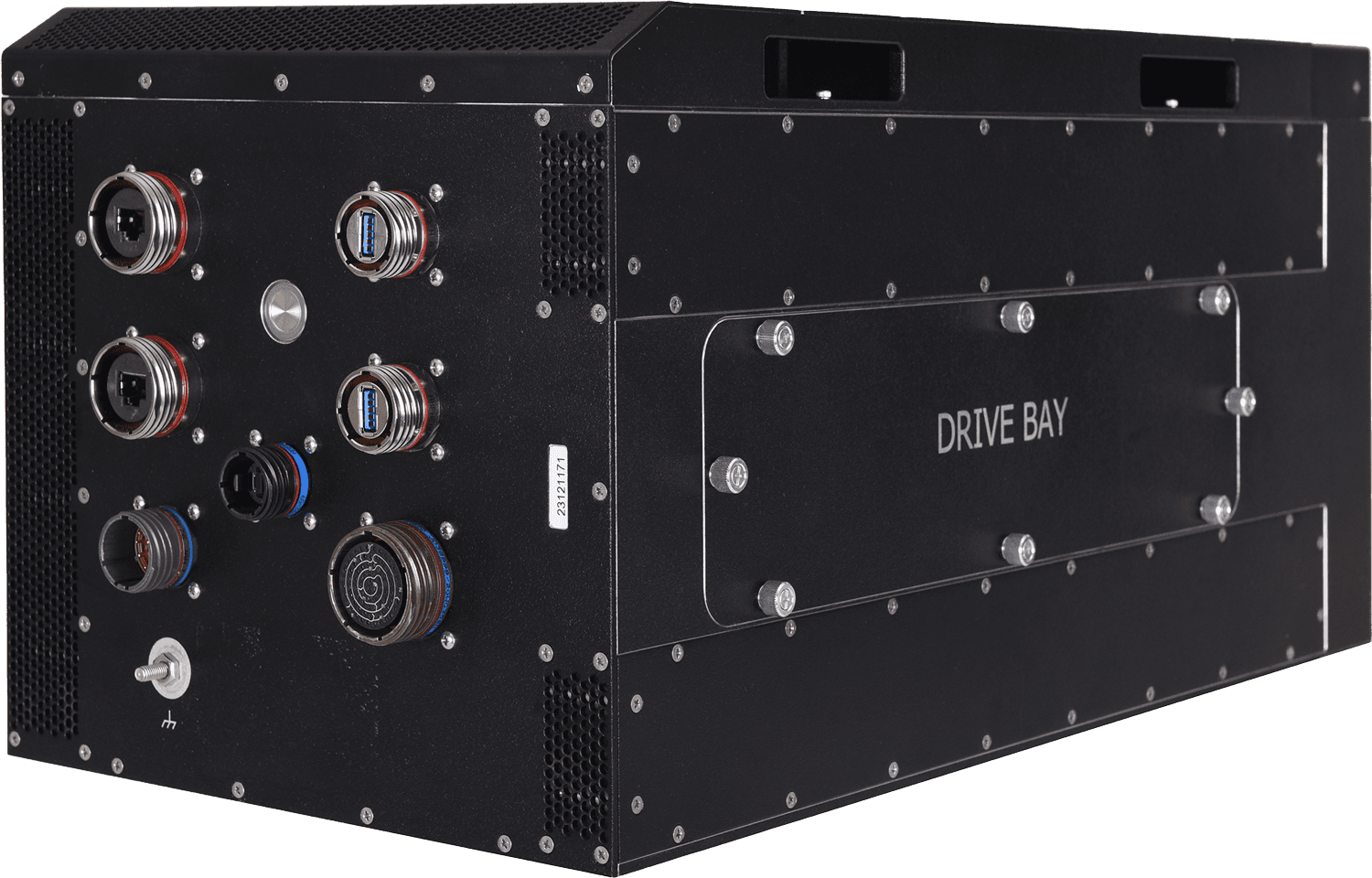
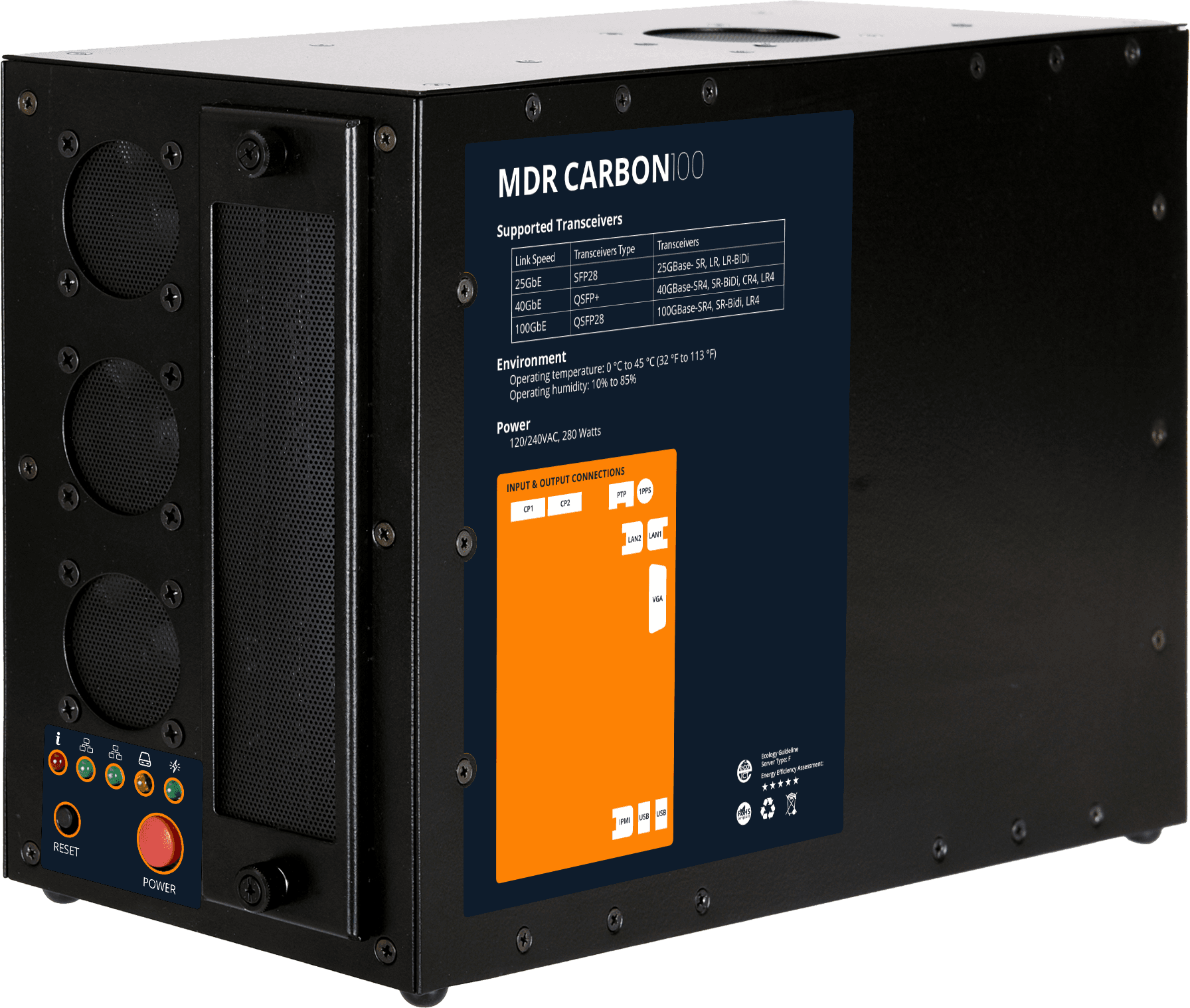
MDR CARBON Series recorders are compact, ruggedized systems designed for laboratory, field, and tactical environments. The MDR line includes form factors such as the ½ ATR-style recorder, making it ideal for airborne or land vehicle use.
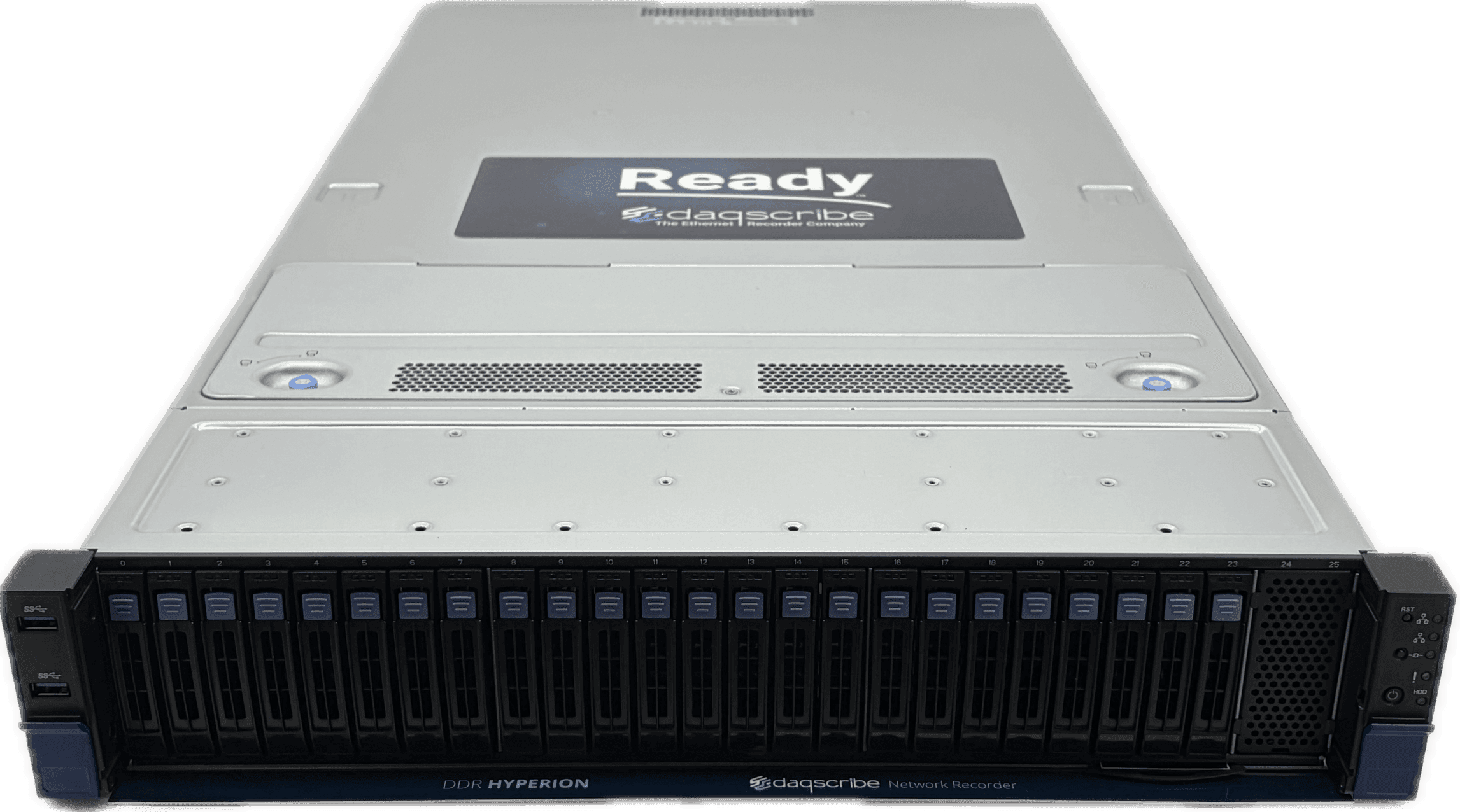
DDR HYPERION Series recorders are high-performance systems built for laboratories, test ranges, and fixed installations. They can sustain throughput from 100 to 400 Gbps in 1U or 2U configurations and offer massive onboard storage — up to 720 TB.
XDR TITAN Series represents our defense-grade platform, engineered for airborne, naval, and ruggedized use cases. The XDR TITAN100, for instance, has already been deployed to support U.S. Government mission programs that require zero packet-loss recording with CSfC-compliant data-at-rest (DAR) storage.
So, think of MDR as your compact tactical line, DDR as your high-speed lab workhorse, and XDR as your mission-hardened defense solution.
MDR CARBON100
XDR TITAN100
DDR HYPERION400
Q: How does a customer decide between 100, 200, or 400 Gbps capability?
A: It depends on two things — sensor count and channel bandwidth. If your system aggregates data from multiple SDRs, radar channels, or RFSoC boards, your aggregate traffic could quickly exceed 100 Gbps.
In those cases, it’s better to scale up early. Our modular design philosophy means you can start at 100 Gbps and expand by simply adding additional ports or recorder units in a stacked configuration.
For instance, several customers in advanced radar and electronic warfare development environments deploy 2×100GbE (DDR HYPERION200) or 4×100GbE (DDR HYPERION400) configurations. The scalability is linear and predictable, which makes future upgrades straightforward.
Q: How does Daqscribe ensure “Zero Packet-Loss” performance?
A: This is our defining feature. We design from the network port inward — meaning every layer of the system, from SmartNIC integration to memory architecture and SSD array throughput, is tuned to move every data packet from port to disk, as fast as it arrives — there’s absolutely NO throttling. Our nRec™ software engine, part of the nStudio™ suite, orchestrates packet capture and writes data directly to disk at line rate.
Every bit entering the network port is accounted for, ensuring deterministic and lossless recording — even at 400 Gbps sustained rates. The result is what we call deterministic throughput assurance — a guarantee that your data is captured exactly as transmitted.
Q: What about size, weight, and power (SWaP) — especially for airborne or mobile applications?
A: That’s one of our biggest differentiators. For example, our MDR CARBON100 and MDR CARBON-S systems achieve 100 Gbps line-rate recording in a ½ ATR chassis.
These systems are designed for SWaP-sensitive missions — think airborne ISR, ground-based mobile operations, and unmanned platforms — while maintaining the same zero-loss performance as our full-size systems. When higher bandwidths are needed in these environments, we adapt the same technology into mission-qualified enclosures that meet MIL-STD-810, MIL-STD-461, and DO-160 standards.
Q: What storage capacities are available, and how is data managed?
A: Our recorders scale from tens to hundreds of terabytes. For example, a standard DDR HYPERION100 can be ordered with 45 TB, while higher models can reach 720 TB of internal SSD storage.
All data is saved in PCAP format, making it fully compatible with analysis tools such as Wireshark®, Suricata, or nPlay™ — our playback software that replays captured traffic back into your network at original or variable speeds.
We also offer our nDiscovery™ software for deep packet indexing and analysis, and PFilter™ for real-time packet filtering within the onboard FPGA.
Q: What kind of customer support and service options does Daqscribe provide?
A: Every system includes 90 days of complimentary support under our ASIS (Advanced Support and Integration Services) program.
After that, customers can subscribe annually for continuous access to patches, performance updates, and technical assistance. We understand that many of our systems end up in classified or mission-critical programs, so ASIS is designed for fast, secure, and compliant communication between Daqscribe and our defense customers.
Q: What’s next for Daqscribe?
A: We’re continuing to expand our nStudio™ software ecosystem and scaling our hardware to support 400GbE (QSFP56-DD) for 2026, then 800GbE, and beyond.
As mission and hyperscale networks evolve, we’re ensuring that our customers have the tools to capture, analyze, and replay data at the highest fidelity — wherever their operations take them.
Final Thoughts
Whether you’re developing next-generation SIGINT payloads, validating sensor fusion algorithms, or fielding mission systems for EMSO/EW operations, Daqscribe has a recorder tailored to your performance envelope.
From compact tactical recorders to enterprise-class high-throughput systems, every Daqscribe product shares the same DNA: precision-engineered, zero packet-loss Ethernet recording everywhere.